Pressure treated softwood decking in Dublin typically lasts somewhere between 10 and 15 years before it needs replacing, less if it was badly built or badly maintained, more if it was installed properly with good drainage underneath. Composite decking generally runs 20 to 30 years with far less upkeep. The honest answer, though, is that the way a deck is built in the first place matters more to its lifespan than the timber species or the weather it sits in.
What Actually Shortens a Deck’s Life in Dublin
Dublin doesn’t get extreme weather, but it gets a lot of the wrong kind of weather for timber. We don’t have long dry summers that let a deck fully dry out between rain. What we have instead is months of drizzle, overcast days, and damp air that sits around at ground level, especially in gardens with high walls or mature trees that block the sun. That combination of moisture without drying is far harder on timber than a hard frost or a heatwave.
We see this constantly in north facing gardens around Drumcondra, Glasnevin and parts of Rathmines, where period red-brick terraces throw shade over the back garden for most of the day. A deck in that kind of spot will hold moisture for days after rain, and that’s exactly where rot and algae take hold first, usually along the board edges and around the joist ends.
Coastal salt air is another factor that gets underestimated. In Clontarf, Dun Laoghaire and parts of Blackrock, salt laden air speeds up corrosion on screws, brackets and any exposed metal fixings. Once a fixing starts to go, the board around it moves, water gets in, and the deck ages from that one point outward.
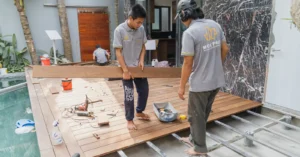
The single biggest mistake we see, across every area of Dublin, is a deck built with no airflow underneath it. If the joists sit too close to the ground, or the deck was laid over bare soil with no gap or membrane, moisture gets trapped underneath permanently. That deck will rot from below long before the surface boards look tired, which is why a deck can look fine on top and still be structurally dangerous.
Timber or Composite: Different Lifespans, Different Trade-offs
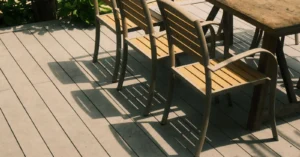
There’s no single “best” material, there’s only what’s right for the garden and how much maintenance the homeowner actually wants to do. Timber decking is cheaper to install, looks warmer and more natural, and suits period properties well, but it needs re-staining or oiling roughly every one to two years to get a full lifespan out of it. Skip that and you’ll shorten its life considerably.
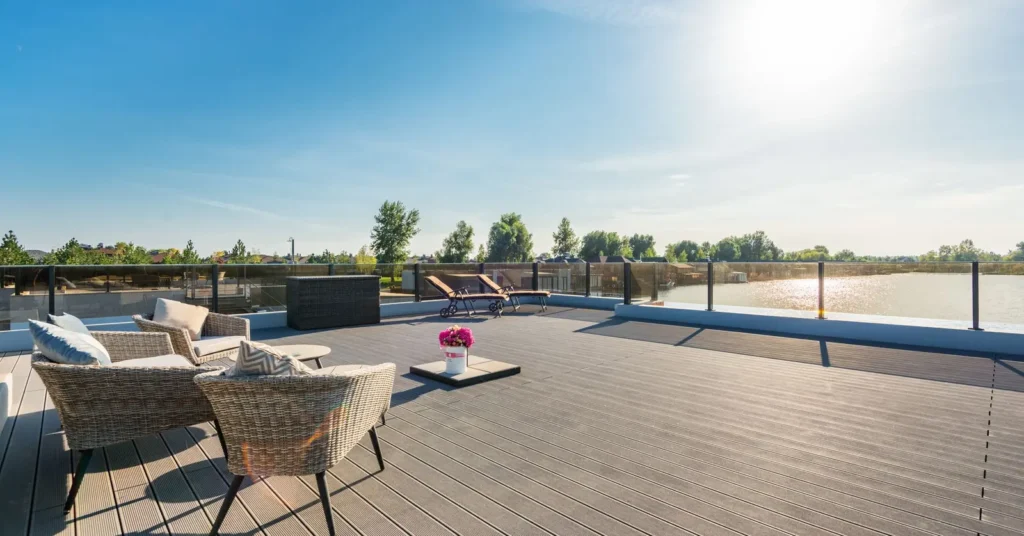
Composite decking costs more upfront but doesn’t rot, doesn’t need staining, and shrugs off Dublin’s damp far better than timber. For a shaded, damp garden, or for anyone who travelled too much to keep on top of yearly maintenance, we’d steer most people toward composite without much hesitation. For a sunny, well ventilated garden where someone genuinely enjoys the upkeep, timber is still a perfectly good choice and often the better looking one.
The Warning Signs We Look For
Most homeowners don’t notice a deck failing until it’s fairly far gone, because the damage usually starts underneath or between boards, out of sight. These are the signs worth checking for, ideally every spring:
- Boards that feel spongy or flex more than they used to when you walk on them
- A screw head that spins freely without tightening, or has rusted and stained the timber around it
- Dark staining or a persistent damp smell coming from underneath the deck
- Gaps opening up between boards, or boards cupping (curling at the edges)
- Moss or algae that keeps coming back no matter how often it’s cleaned off
- Any wobble in the handrail or steps, which usually means a post fixing has failed
One spongy board on its own isn’t an emergency. A wobble in a support post is. That’s a structural issue, not a cosmetic one, and it’s worth getting looked at before someone puts weight on it.
What Pushes Replacement Cost Up or Down
We won’t quote a figure here because every deck is different and giving a generic number does nobody any favours, but these are the things that genuinely move the cost of a replacement:
- Size and shape of the deck, including how many corners, steps or changes in level it has
- Whether it’s a simple ground level deck or raised decking that needs proper structural support, which is common on the sloped gardens we see around Dundrum and Rathfarnham
- Timber versus composite, since composite boards cost more but need far less spent on them afterwards
- Whether the existing substructure (the joists and posts) can be reused or has to be fully removed and replaced
- Access to the garden, as a deck behind a narrow side passage or through a house takes longer to build than one with direct access
- Any extras like built-in lighting, balustrades or seating integrated into the design
As a rule, replacing the whole structure down to the posts costs more than re-decking over a sound frame, which is why it’s worth getting someone to actually inspect the substructure before assuming the whole thing needs to go.
Repair or Replace? How We Make That Call
If the frame underneath is sound and the problem is a handful of damaged boards, loose fixings or a tired looking surface, decking repairs are usually the sensible, cheaper route. We’d rather tell a homeowner that than talk them into a full rebuild they don’t need.
Where we move to full decking replacement is when the joists themselves are soft or rotten, when more than a handful of posts are affected, or when the deck was built without a gap underneath and has been trapping moisture for years. In that situation, patching the surface just hides the problem for another year or two before it comes back worse. We’d always rather give an honest answer about which category a deck falls into than sell a repair that won’t hold.
If you’re planning a new deck from scratch, or weighing up a garden project that includes decking as part of a bigger layout, our garden decking and decking installation pages go into more detail on how we approach a build from the ground up, including the drainage and ventilation details that decide how long it actually lasts.
We’ve been installing and repairing decking across Dublin for over 21 years, from city centre gardens to the bigger plots out in Swords and Stillorgan, and the thing that separates a deck that lasts 25 years from one that fails in 8 is almost always what’s happening underneath it, not what you can see on top. If you’d like an honest opinion on whether your deck needs repair, replacement, or just a bit of maintenance, have a look at our decking services or get in touch through our contact page and we’ll take a look.
Frequently Asked Questions
How long does timber decking last in Dublin?
Well built and maintained pressure treated timber decking generally lasts 10 to 15 years in Dublin. Decks that are left unstained, built without a ventilation gap underneath, or placed in a shaded, damp corner of the garden tend to fail well before that.
Is composite decking really worth the extra cost?
For damp, shaded gardens or anyone who doesn’t want to stain and oil timber every year or two, yes, it usually pays for itself over time through lower maintenance and a longer lifespan, often 20 to 30 years. For a sunny garden where the homeowner is happy to do the upkeep, timber is still a solid, good looking choice.
Do I need planning permission for a new deck in Dublin?
Many garden decks fall under exempted development, but this depends on the height of the deck, how close it is to a boundary, and the size relative to the house. Rules can be specific and do change, so always confirm the current position with your local authority before building, particularly for raised decking.
Can I just lay new boards over my old deck instead of replacing the whole thing?
Only if the frame underneath is sound. If the joists and posts are solid and dry, re-decking over them is a reasonable and cheaper option. If there’s any softness, rot or movement in the structure, boarding over it just hides a problem that will come back.
How often should I maintain my deck to get the full lifespan out of it?
Timber decking should be cleaned and re-stained or oiled roughly every one to two years, and it’s worth checking fixings and the underside of the deck every spring. Composite decking needs an occasional wash down but nothing close to that level of upkeep.
What’s the first sign that a deck needs to be looked at by a professional?
Any wobble in a handrail, post or step. Spongy or flexing boards are also worth getting checked. Surface staining or discolouration is usually cosmetic, but movement in the structure is a sign the frame underneath may have failed.