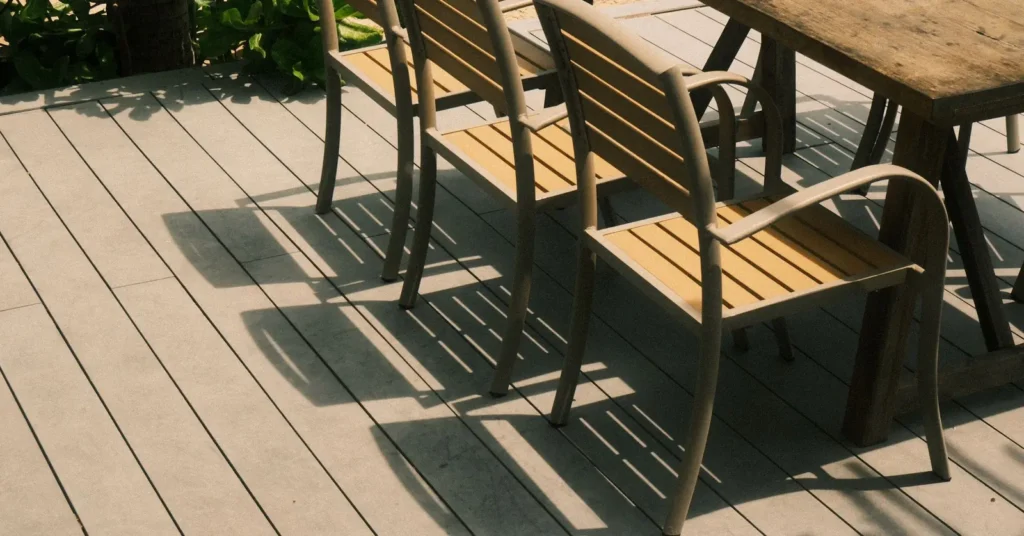
Composite decking needs far less work than timber, but “low maintenance” does not mean “no maintenance”. Timber needs cleaning, sanding and re-oiling or staining every year or two to stop it going grey, cupping or rotting. Composite just needs a wash with soapy water a couple of times a year and an eye kept on the gaps between boards where leaves and grit build up. The big difference is what happens if you skip it: neglected timber rots, neglected composite mostly just looks a bit dirty.
What actually goes wrong with timber decking in Dublin gardens
We see the same pattern on timber decks across Dublin, from older gardens in Drumcondra and Glasnevin to newer builds out in Swords. The owner oils it the first summer, gets busy, and by year three the boards have gone silvery grey and started to split at the ends. Once that happens, water gets into the grain and sits there, because Dublin’s climate gives us a lot of damp, mild weather rather than long dry spells that let timber fully dry out between rain showers.
Shaded gardens are the worst for it. A lot of Dublin back gardens are boxed in by boundary walls, sheds or mature trees, especially in older suburbs like Rathmines, Terenure and Rathfarnham. Less direct sun means the deck stays damp longer after rain, and that is exactly the condition algae and black mould love. On timber, that greasy green film is not just unsightly, it is slippery and it speeds up rot underneath if it is not cleaned off.
The other thing homeowners miss is the substructure. The joists and bearers underneath a timber deck take the real punishment, sitting closer to damp soil and getting far less airflow than the boards on top. If those are not inspected, you can have a deck that looks fine from above but is soft and failing underneath. That is usually when we get the call for decking repairs rather than a simple clean and re-oil.
Why composite decking needs a different maintenance routine
Composite boards are made from wood fibre and recycled plastic, so they do not rot, splinter or need staining. That is the real selling point, and it is a fair one. But composite still sits outside in Irish weather, and it still collects dirt, pollen, leaf litter and the odd patch of algae, particularly on shaded or north-facing decks where it stays damp for longer.
The maintenance that composite does need is simpler but not optional. A wash with warm water and a mild detergent, using a soft brush rather than a wire one, keeps the surface clean and stops any build-up turning into a stain that is harder to shift later. Avoid oil-based cleaners or anything with bleach as a first resort, as these can dull the surface finish or affect the colour on some boards. We would also check the drainage gaps between boards every so often. Composite boards do not expand and contract the way timber does, but debris can still wedge in there and hold moisture against the board edge.
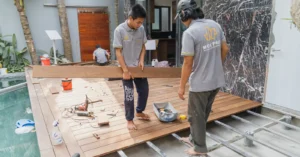
One thing that genuinely surprises people: the frame underneath composite decking is very often still timber. Composite boards themselves will not rot, but if they are sitting on a timber joist structure that was not built with proper ventilation and drainage, that frame can still deteriorate over the years, hidden under boards that look perfectly fine. This is one reason the quality of the initial build matters as much as the decking material itself. It is something we always get right on our composite decking installations, and it is worth asking any installer directly how they are building the substructure.
Timber care versus composite care, side by side
- Timber decking: clean and check annually, sand back rough or splintered areas, re-oil or re-stain roughly every one to two years depending on exposure, replace individual boards as they warp or split, inspect fixings and joists for rot.
- Composite decking: wash with mild detergent two or three times a year, clear leaves and debris from board gaps, remove algae on shaded sections with a soft brush, no oiling, staining or sanding required, check the timber substructure periodically even though the boards themselves will not rot.
The maintenance mistake we see most often in Dublin gardens
With timber, it is leaving the first re-oil too late. People wait until the deck looks tired before treating it, but by then the wood has already started absorbing water it should not be. Oiling is about sealing the timber before it dries out and opens up, not restoring colour after the fact. Done early and consistently, a timber deck in a typical Dublin garden can look good for many years. Left two or three years without attention, it ages fast.
With composite, the mistake is almost the opposite: people assume it needs nothing at all, then wonder why there is a dark stain under the garden table or along a shaded fence line that has not been power-washed in years. Composite does not rot, but organic stains from leaves, berries or overhanging trees can set into the surface if left too long, especially on gardens near mature trees in areas like Dundrum or Stillorgan. A quick clean twice a year avoids that entirely.
Which one actually makes sense for your garden
If your deck is in full sun, well away from trees, and you do not mind a yearly maintenance job, timber is a perfectly sound choice and often suits period Dublin houses better visually. We fit a lot of timber decking for exactly that reason. If your garden is shaded, you want to spend your weekends doing something other than sanding boards, or the deck is raised and awkward to access for annual treatment, composite is usually the better call. We see this a lot with raised decking projects, where getting underneath to treat the frame every year is simply not practical.
Cost comes into it too, without putting a figure on it here. Composite costs more upfront but less over time, since you are not buying oil or stain every year or two, or paying for sanding labour. Timber is cheaper to install but the lifetime cost depends entirely on how well it is maintained and how exposed the site is. Either way, the real driver of cost on any job is the size of the deck, the height and complexity of the frame, access to the garden, and whether an old deck needs to come out first.
We have been installing and maintaining decking across Dublin for over 21 years, from small garden projects in Clontarf to larger raised decks in Dun Laoghaire, so we have a fair sense of what each material actually does once it has been through a few Irish winters. If you want an honest opinion on which option suits your garden, or a quote for a new deck or a repair to an existing one, have a look at our decking services or get in touch through our contact page.
Frequently Asked Questions
Does composite decking need any maintenance at all?
Yes, just much less than timber. It needs periodic cleaning with mild detergent and water, clearing of debris from between boards, and occasional attention to algae in shaded spots. It never needs oiling, staining or sanding.
How often should timber decking be oiled or stained in Dublin?
Most timber decks in Dublin gardens need re-oiling or re-staining roughly every one to two years, though shaded or heavily exposed decks may need it sooner. Checking the boards each spring and treating them before they dry out and split is the key habit.
Can mould and algae grow on composite decking?
Yes. Composite will not rot from it the way timber can, but algae and black mould can still form on shaded or damp sections. A wash with a soft brush and mild detergent a few times a year prevents build-up.
Will the timber frame under my composite deck still rot?
It can, if the substructure was not built with proper drainage and ventilation. The composite boards themselves will not rot, but the frame underneath is often still timber and needs to be built and maintained correctly from the start.
Is composite decking worth it if timber is cheaper to install?
It depends on your garden and how much upkeep you want to do. Composite costs more upfront but needs far less ongoing work, so over several years the lower maintenance can offset the higher initial outlay. For an exact figure for your garden, it is best to get a quote based on the size and layout of the job.
Can I pressure wash composite decking?
Light pressure washing is generally fine on most composite boards, but keep the nozzle at a reasonable distance and avoid very high settings, as excessive pressure can mark the surface finish. For regular cleaning, a soft brush with warm soapy water is usually enough and safer for the board surface.